
Industry bodies representing alcoholic beverage manufacturers have welcomed the India-UK Free Trade Agreement (FTA), which will see tariffs on UK whisky and gin reduced, boosting bilateral trade and supporting premiumisation. However, domestic manufacturers are calling for state governments to withdraw concessions currently enjoyed by imported liquor brands.

India and New Zealand are poised to sign a free trade agreement (FTA) on April 27 in New Delhi, aiming to provide tariff-free access for Indian goods to New Zealand's market and attract USD 20 billion in investment over the next 15 years.

Quota-based duty concessions granted by India to New Zealand for apples, kiwifruit, and Manuka honey are linked to the delivery of agriculture productivity action plans committed by the island country under the free trade agreement.

'They talked bad about our leaders. They said India was a dead economy. They were not sensitive to the Indian psyche.'

Textiles, pharmaceuticals, chemicals, engineering goods, gems and jewellery exports will receive a boost from the free trade agreement between India and the 27-nation European Union, according to exporters.
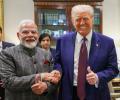
The agreement addresses non-tariff barriers and promotes increased trade in technology products and cooperation between the two countries.

Indian officials will visit the US to finalise the legal text for an interim trade agreement, expected to be signed in March, focusing on duty concessions and reciprocal tariffs.

India has been on an FTA-signing spree of late. Since 2021, it has signed eight trade agreements, three of which -- with the UK, Oman and New Zealand -- were finalised in 2025 alone.

Customs regimes can lead to labyrinthine legal disputes. Budget 2026 must recognise that an excessively defensive Customs posture can itself become a trade barrier, point out Mukesh Butani and Shankey Agrawal.
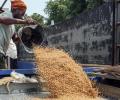
Very sensitive items -- such as apples, which carry political weight and are closely tied to farmer interests in states like Himachal Pradesh and Uttarakhand -- may face restricted concessions.

European wines are set to enter the Indian market at lower prices under the bilateral free trade agreement as India will provide import duty concessions under the pact, an official said. Under the pact, the duty on EU wines would fall from 150 per cent to 20 per cent (for expensive ones).

The tariff removal will lower prices of Harley's large-displacement imported motorcycles, which retail between 14.5 lakh and 45.8 lakh but after the duty cut volumes are expected to remain modest.
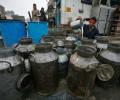
India has fully protected its sensitive sectors like dairy, rice, wheat, pulses, tea, genetically modified (GM) goods, and coffee by not granting any import duty concessions to the European Union (EU) under the bilateral free trade agreement, according to the Commerce Ministry.
Import duty cuts on labour-intensive sectors such as textiles and footwear, as well as cars, and wines, are likely to be part of the free trade agreement between India and the 27-nation bloc European Union (EU), the conclusion of which is set to be announced on January 27 here, sources said.

The turning point came with the appointment of Sergio Gor as the US ambassador to India.

India has completely protected the interests of its agriculture and dairy sector in the India-US trade agreement.

The European Union (EU) has suspended export benefits to sectors such as textiles and plastics under a preferential scheme for India and two other countries from January 1, a move that will impact the country's shipment to the 27-nation bloc. The development is important as the two sides are likely to announce the closure of negotiations for a free tarde agreement (FTA) on January 27.

Prime Minister Narendra Modi on Tuesday announced the signing of the India-EU Free Trade Agreement (FTA), saying it accounts for 25 per cent of global GDP and one-third of global trade.

New Delhi will substantially reduce tariffs on industrial and agricultural goods while continuing to protect sensitive sectors. Tariffs on some agricultural products that are not traditionally considered sensitive will be brought down to zero, while in the case of relatively sensitive items, duties will be reduced in a graded manner and quotas will be imposed.
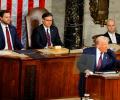
I'...additional concessions, such as opening government procurement, reducing agricultural subsidies, weakening patent protections, and allowing unrestricted data flows -- demands India has resisted for decades.'

Speculation about rising competition from global majors has led to shares of major Indian automobile manufacturers such as Mahindra & Mahindra (M&M), Maruti Suzuki India, and Tata Motors taking a hit on the BSE.

The deal shifts the US posture towards India from hostile to neutral, and that matters for growth, points out T T Ram Mohan.
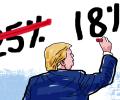
'Trump says India will buy over $500 billion of US goods.' 'At present, India's annual imports of goods and energy from the US are under $50 billion.' 'Reaching $500 billion would likely require more than 20 years, suggesting the figure refers to a long-term aspiration rather than a near-term commitment.'
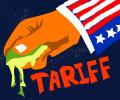
A trade deal makes sense only if it is fair and reciprocal. If the cost is strategic dependence or loss of policy space, waiting is the wiser option, asserts Ajay Srivastava.
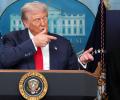
In trade negotiations, as in chess, sometimes you need to accept a temporary disadvantage to secure a better long-term position, points out Sonal Varma, chief economist (India and Asia ex-Japan) at Nomura.

Vance also hinted that the US may drop additional tariffs on countries if the US make a deal with Russia, and also apply more tariffs on the countries to bring this war to a close.

Amid uncertainty over trade talks with the US, Prime Minister Modi asserts India's commitment to protecting the interests of farmers and fishermen, vowing no compromise on their behalf.

Hectic parleys are underway between officials of India and the US in Washington on the proposed interim trade agreement between the two countries, an official said on Wednesday.
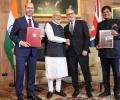
India and the UK on Thursday inked a landmark free trade agreement (FTA) that will cut tariffs on British whisky, cars and an array of items, besides boosting bilateral trade by around $34 billion annually.
India and the United States will finalize the contours, schedule of negotiations, and terms of reference for a proposed bilateral trade agreement (BTA) during a three-day meeting beginning Tuesday. The agreement is expected to be finalized in two tranches, with the first phase focusing on goods trade. The US team, led by Assistant US Trade Representative for South and Central Asia Brendan Lynch, will be in India from March 25-29 to discuss the agreement. Both countries are aiming to conclude the first phase of the agreement by fall 2025.
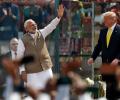
'It's important for India to think about areas where it wants the US to move.' 'We can be far more innovative in what we ask the US.' 'Given that there's a package deal, why not do it?'
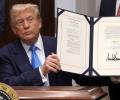
For India, the challenge is to strike a balance between tactical necessity and economic priorities, point out Pravin Krishna and Monil Sharma.
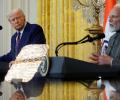
The deal fell through over unresolved disagreements over contentious issues, mainly on agriculture and automotive sector tariffs.
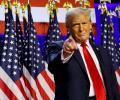
American President Donald Trump has announced imposing reciprocal tariffs on its major trading partners including China that levy higher import duties on goods shipped from the United States. He has already announced a 25 per cent duty on steel and aluminium imports, which will come into effect from March 12.
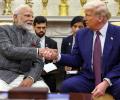
'India's farmers will be unable to compete with the US, given the subsidies that the latter provides its farmers.'
The comments came a day after US President Donald Trump said that Washington is "very close" to the trade pact with India.
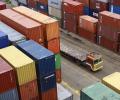
The US Trade Representative noted that India's average applied tariff rate stood at 17% per cent, the highest of any major world economy.

India's gold and silver imports from its free trade agreement (FTA) partner UAE have skyrocketed 210 per cent to $10.7 billion in 2023-24 and there is a need to potentially revise the concessional customs duty rates under the pact to mitigate the arbitrage driving this surge, a report said on Monday. Economic think tank Global Trade Research Initiative (GTRI) said this sharp rise in gold and silver imports is primarily driven by import duty concessions granted by India to the UAE under the India-UAE Comprehensive Economic Partnership Agreement (CEPA).

'Trump is likely being purposefully vague, hoping that this lack of clarity will pressure India, fearing the worst, to agree to scale back its imports of Russian oil.'
